01 Reduced Quality Variation
Maintain pressure, speed, and the transport path at a constant rate
Ensure uniformity of surface quality.
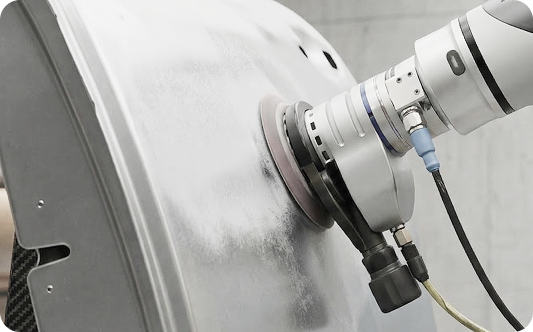
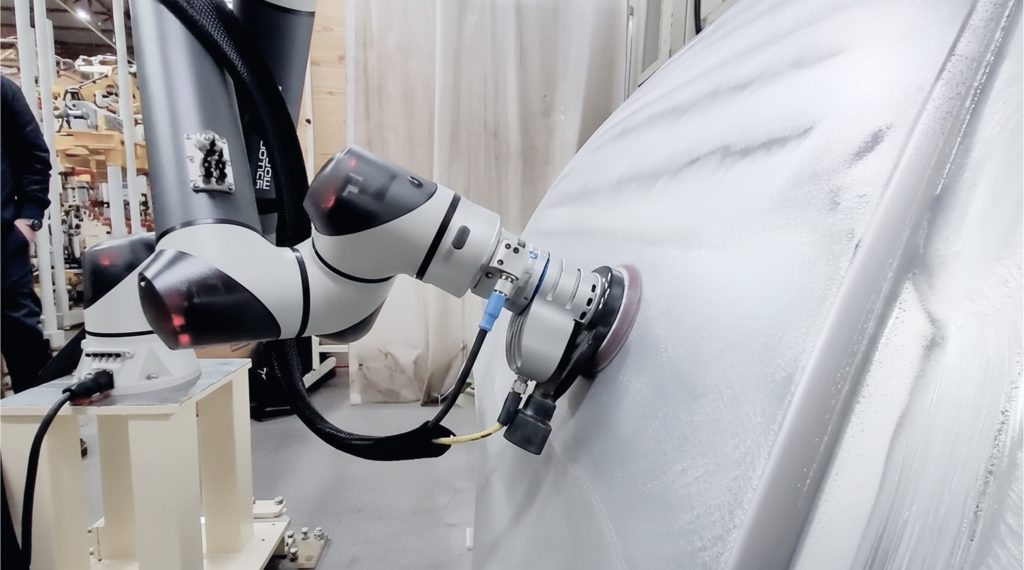
Sanding, deburring, polishing, and surface finishing automate processes that smooth surfaces and improve finishing quality.
Because quality depends on pressure, speed, path, and material condition, robot-based precision control has a strong impact on consistency and safety.
Key Benefits
Maintain pressure, speed, and the transport path at a constant rate
Ensure uniformity of surface quality.
Automating dust, vibration, and noise environments
Minimize physical fatigue and exposure to harmful elements
Even in curved surfaces, corners, and irregular regions
Sanding and polishing with consistent quality are possible.
Even during long, repetitive tasks
Overall throughput increases by maintaining speed and quality
Technology Highlights
Rainbow Robotics robot platforms
provide force control, path control, and tool compatibility for consistent precision finishing.
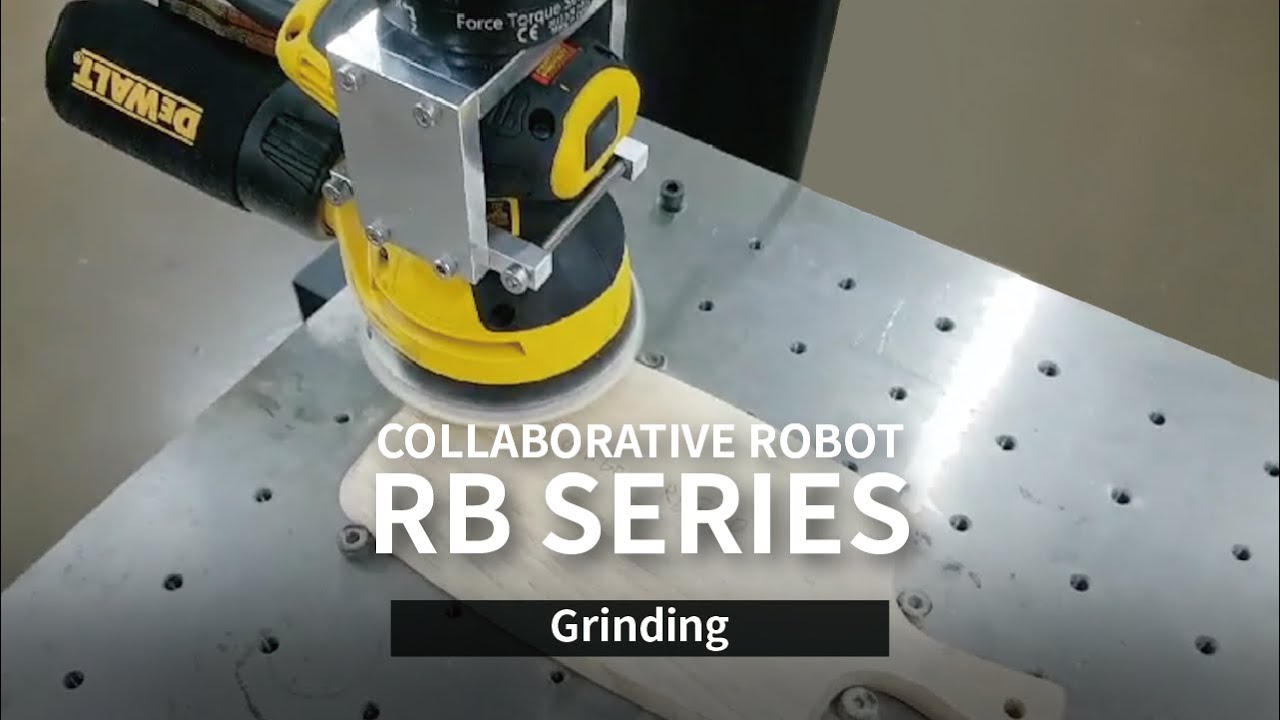
Pressure control, a core function in sanding and polishing, is realized through force- and torque-based precision control technology.
When using robots, pressure is maintained consistently at each location, enabling more uniform surface quality than the work performed by human labor. It provides stable finishing quality, especially on curved surfaces and areas with many surface variations.
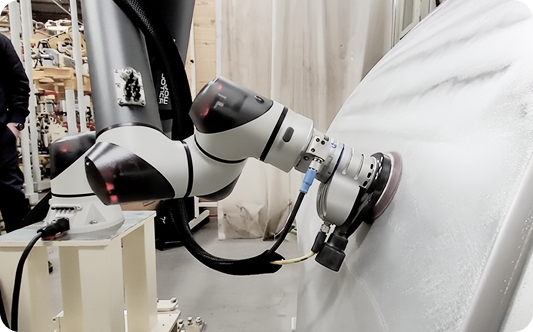
It can interface with a variety of tools such as electric and pneumatic sanding heads, grinding discs, foam pads, and bur removal tools, enabling work setups tailored to the characteristics of materials such as wood, metal, plastic, and composites.
When linked with the tool change system, process transitions are also carried out quickly.
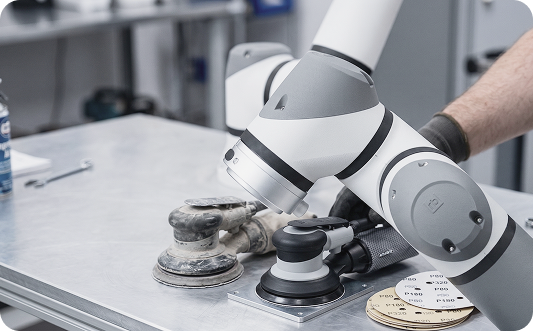
Even products with complex shapes such as curved surfaces, edges, corners, and inclined planes can be machined repeatedly by accurately following a designated path through the robot’s high-precision path control.
It ensures more consistent quality and reproducibility than handcrafting.