01 VLA Infrastructure Development
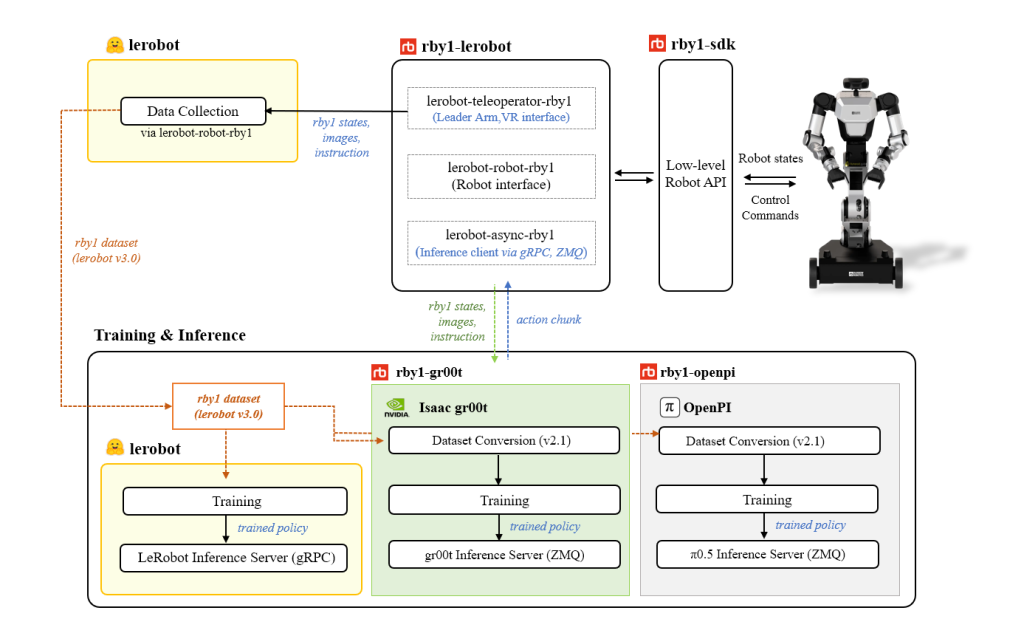
Rainbow Robotics tracks advances in VLA (Vision-Language-Action) technology and builds the operational infrastructure needed to apply VLA models in real robot environments.
Rainbow Robotics integrates AI based on its robot control technology to implement intelligent robotic platforms with enhanced autonomy, adaptability, and safety
Existing automation is optimized for repetitive execution under predefined conditions.
However, real industrial environments are dynamic and unpredictable.
Environments are constantly changing, and processes are becoming increasingly complex.
Robots must now evolve from simple executors into intelligent physical systems (Physical AI) that perceive their surroundings, make decisions, and respond autonomously.
Rainbow Robotics is integrating AI-based autonomous capabilities so that robots can perceive their environment, make decisions, and respond on their own.
Rainbow Robotics is expanding its technology capabilities around two core pillars with the ultimate goal of realizing Physical AI.
Rainbow Robotics tracks advances in VLA (Vision-Language-Action) technology and builds the operational infrastructure needed to apply VLA models in real robot environments.
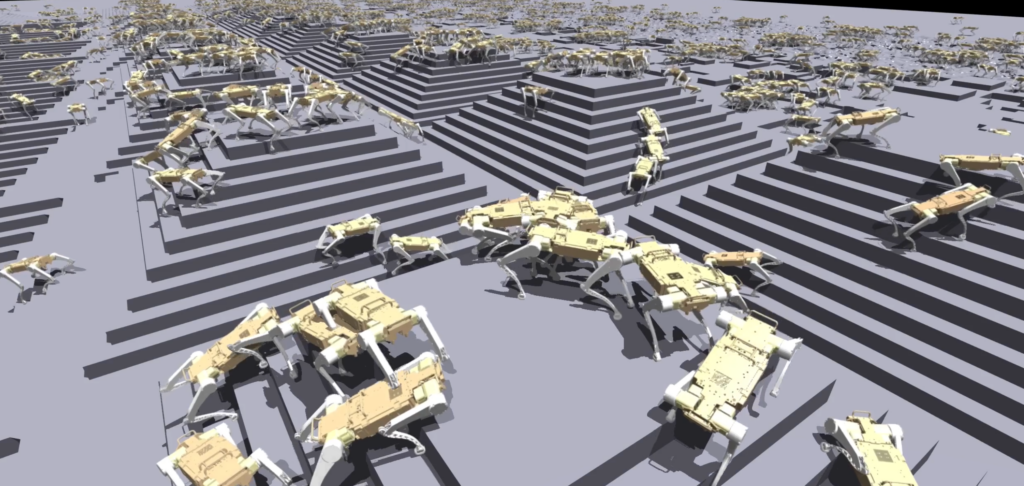
Based on deep model-based control expertise and field application experience, Rainbow Robotics applies reinforcement learning to dynamic locomotion, contact-rich manipulation, and physical interaction optimization.
Model-based control provides stability, predictability, and industrial reliability, while reinforcement learning improves adaptability, nonlinear dynamics optimization, and high-difficulty dynamic behavior learning.
Rainbow Robotics hierarchically integrates VLA-based high-level intelligence and RL-based physical policy with model-based control and safety technologies,
We implement Hybrid Physical AI that connects intelligent decision-making to reliable physical execution.
Delivers a Foundation Model-based VLA solution that connects high-level semantic understanding with low-level physical control
Through powerful dynamics-based control and reinforcement learning, it learns a wide range of robot skills while simultaneously achieving stable physical execution and learning-based adaptability
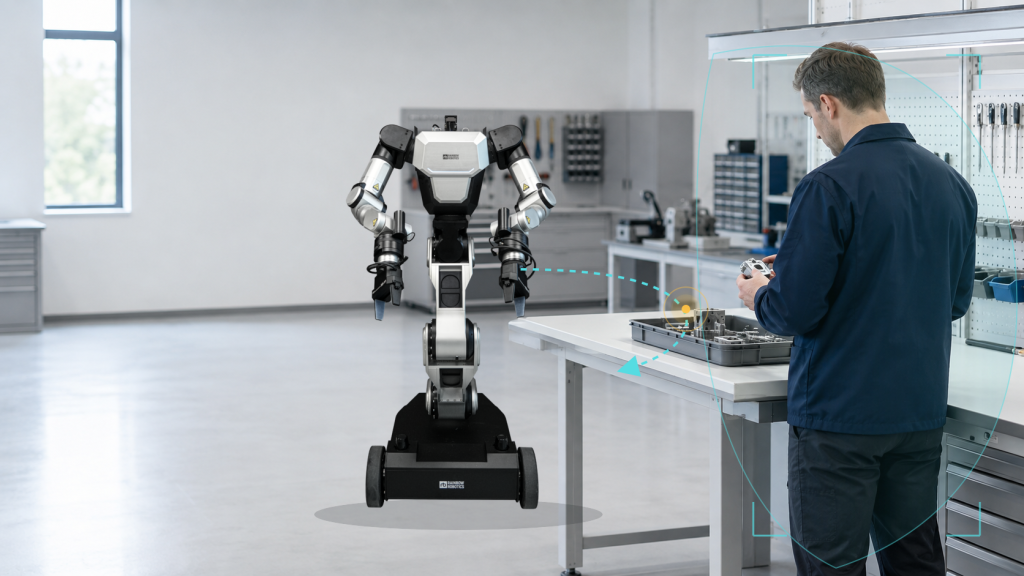
Based on proven industrial collaborative robot and mobile robot technologies, we provide an Industrial-Grade Autonomous Robot platform that ensures the safety and reliability of Physical AI
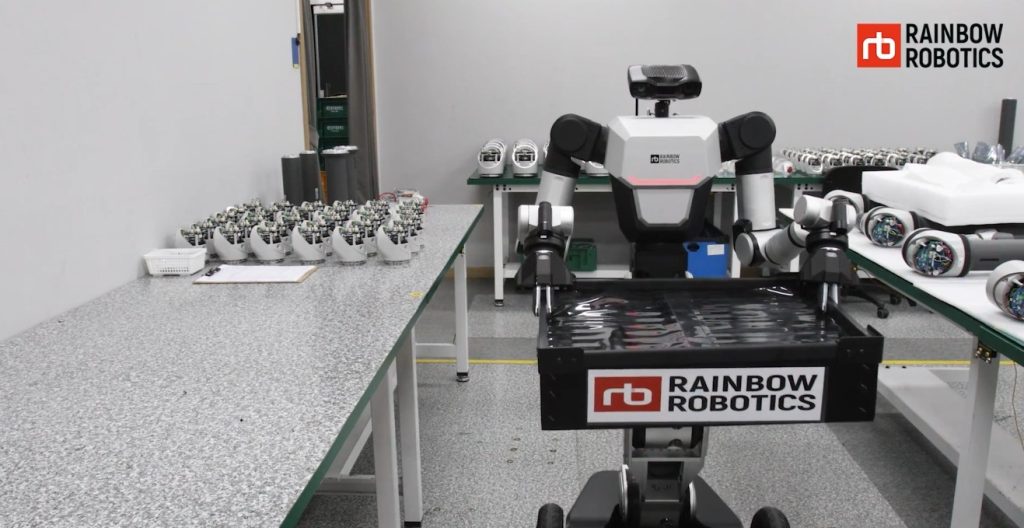
Rainbow Robotics' Hybrid Physical AI strategy extends into manufacturing, mobility, collaboration, and general-purpose task domains.
Integrates multimodal process data such as vision, torque, and position to assess work status in real time and automatically adjust robot motion and process conditions through Hybrid Intelligent Control.
This enables autonomous optimization that learns and corrects process variation beyond simple repetitive execution.
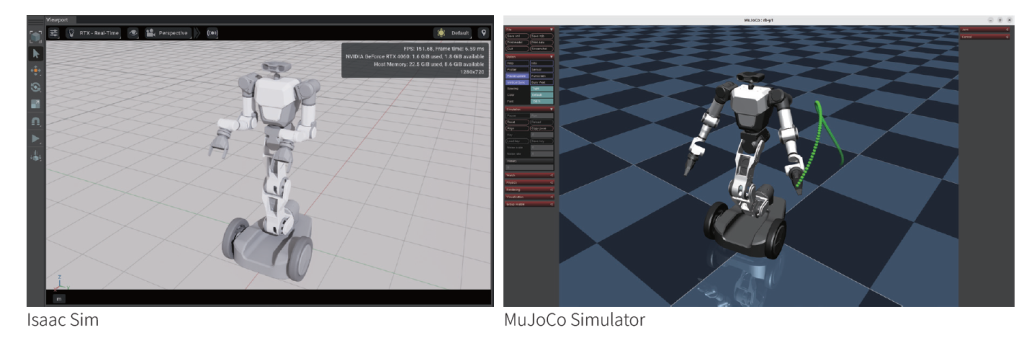
Combines simulation-based learning with real-world data to autonomously optimize mobility, collaboration, and workflow across industrial environments.
This makes stable autonomous operation possible even in complex field conditions.
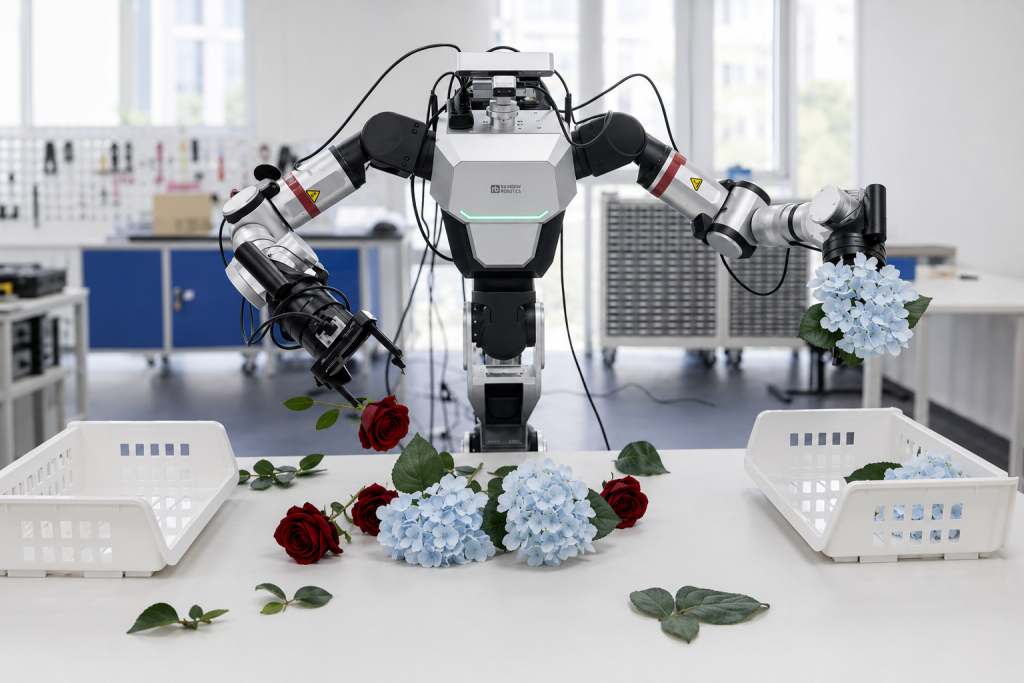
Structures work as reusable skills rather than isolated motions, allowing robots to combine and expand tasks across changing environments.
Through this approach, robots evolve from fixed process equipment into general-purpose Physical AI platforms.
 Teleoperation of Dual-Arm Mobile Manipulator RB-Y1
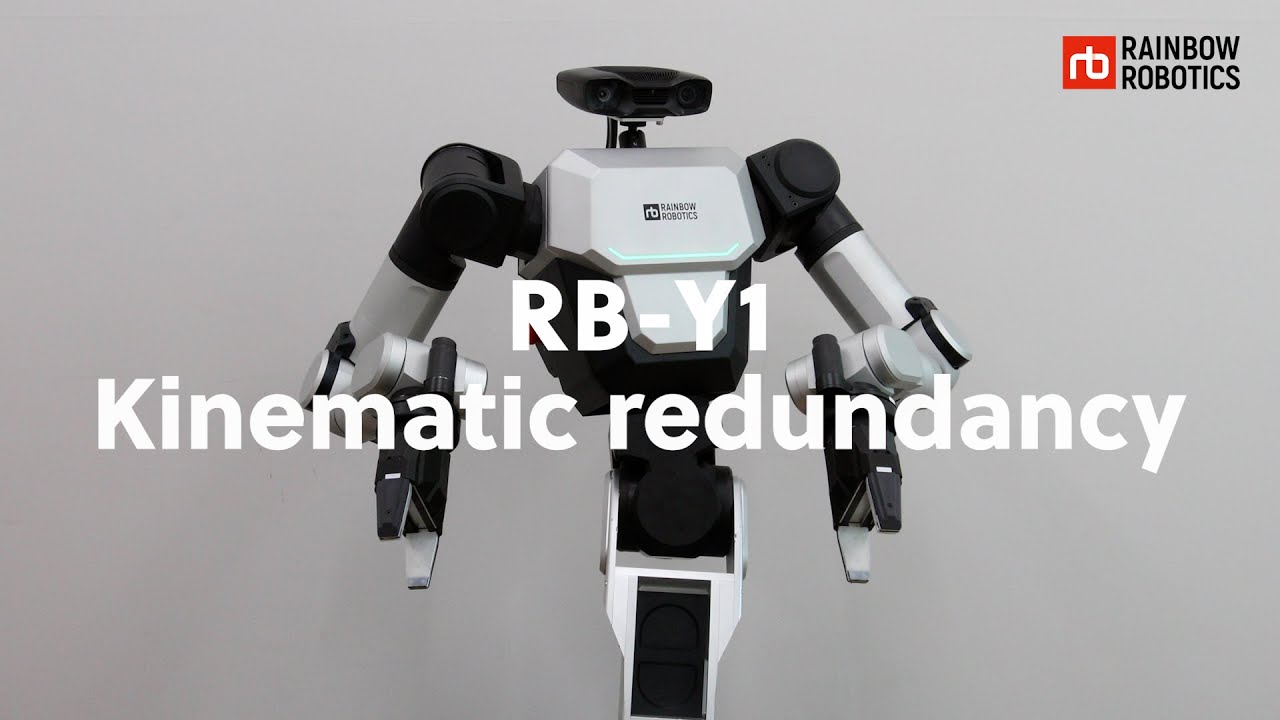 RB-Y1 Mobile Dual-Arm Robot: Kinematic Redundancy Motion
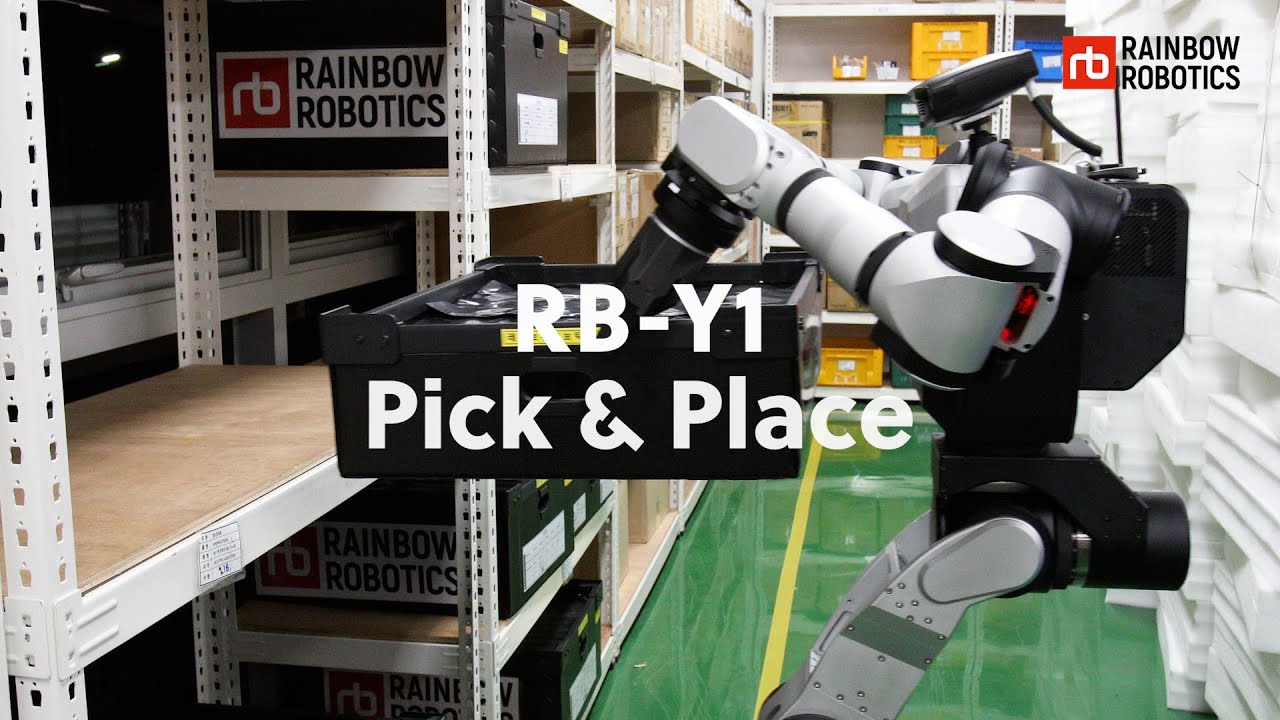 RB-Y1 Mobile Dual-Arm Robot: Pick and Place
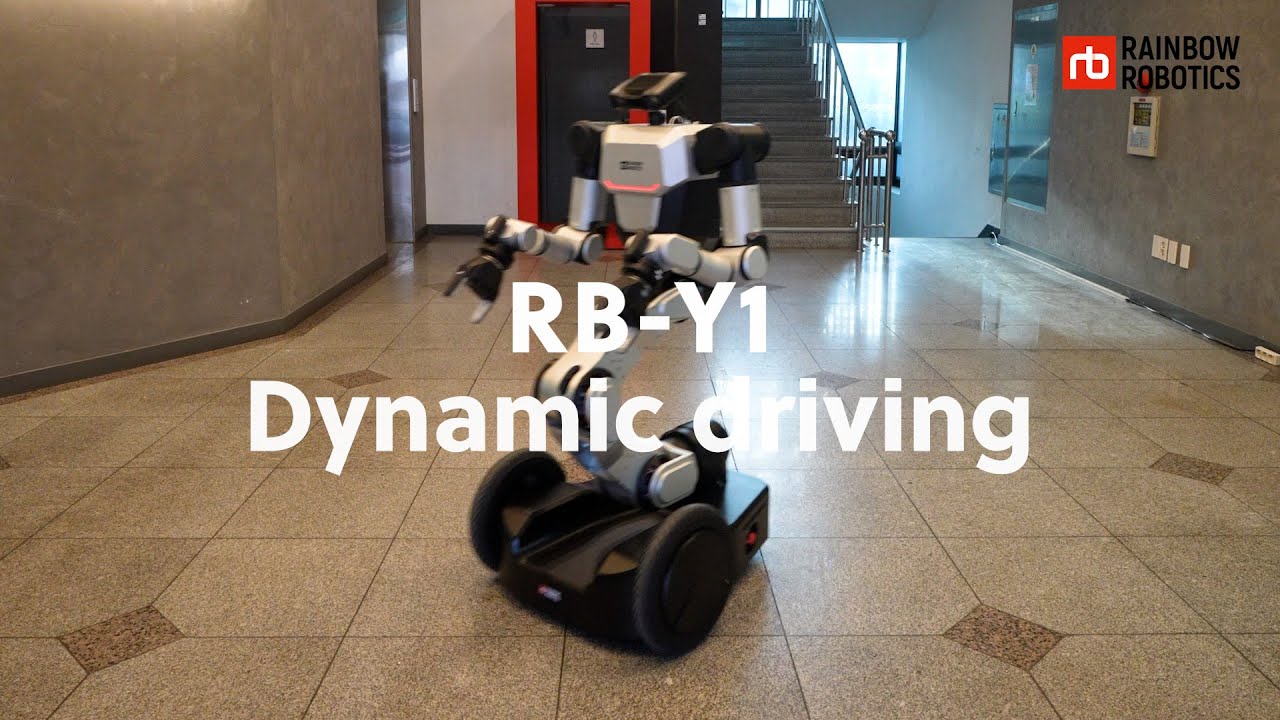 RB-Y1 Mobile Dual-Arm Robot: Dynamic Driving
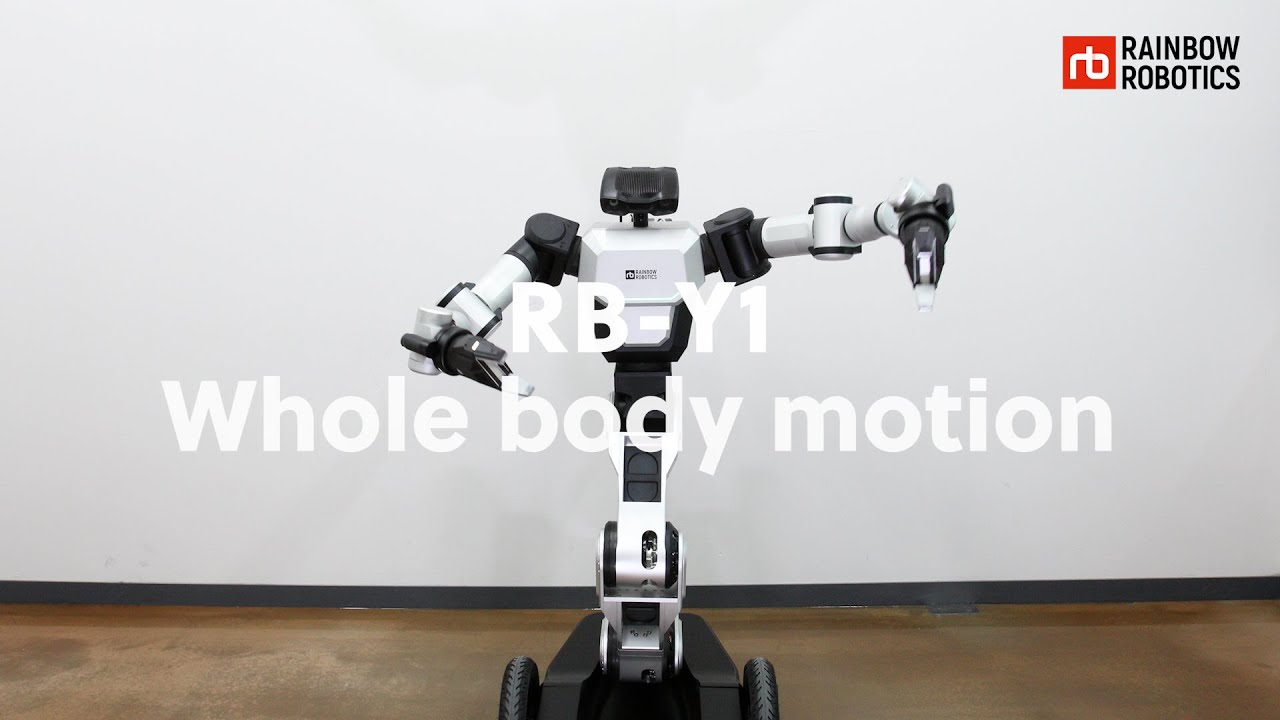 RB-Y1 Mobile Dual-Arm Robot: Whole-Body Motion
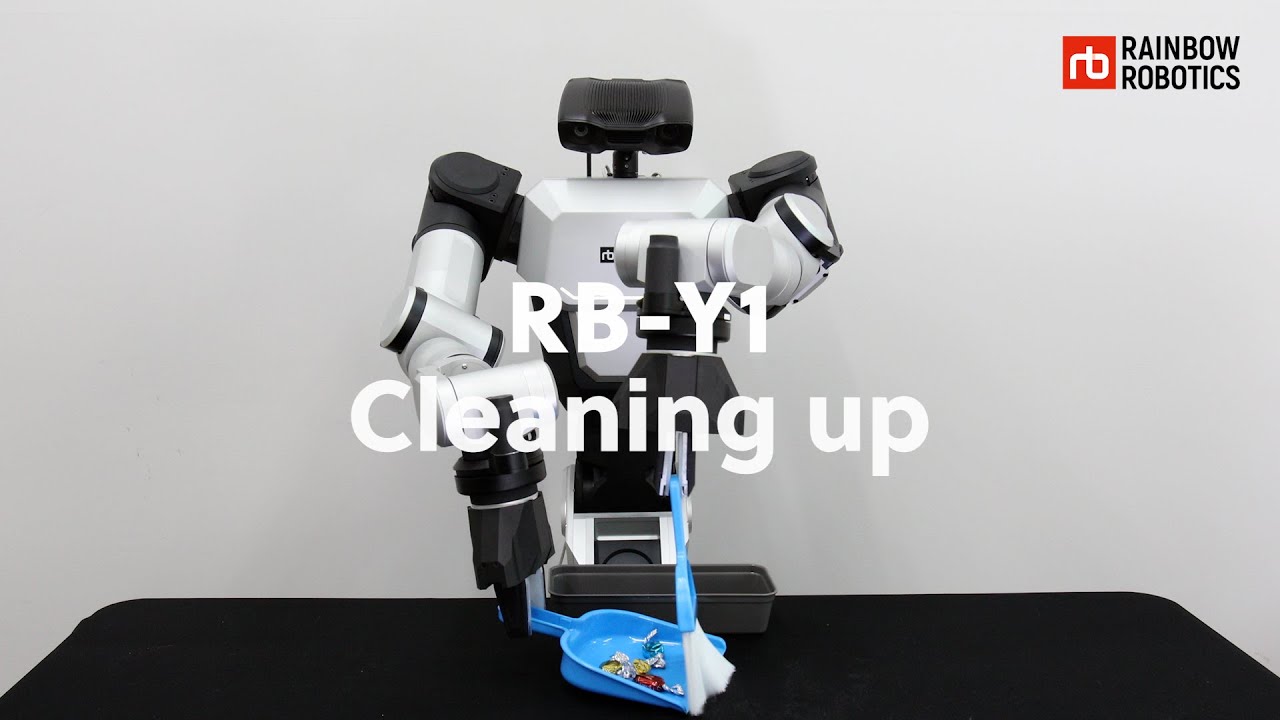 RB-Y1 Mobile Dual-Arm Robot: Cleaning Up
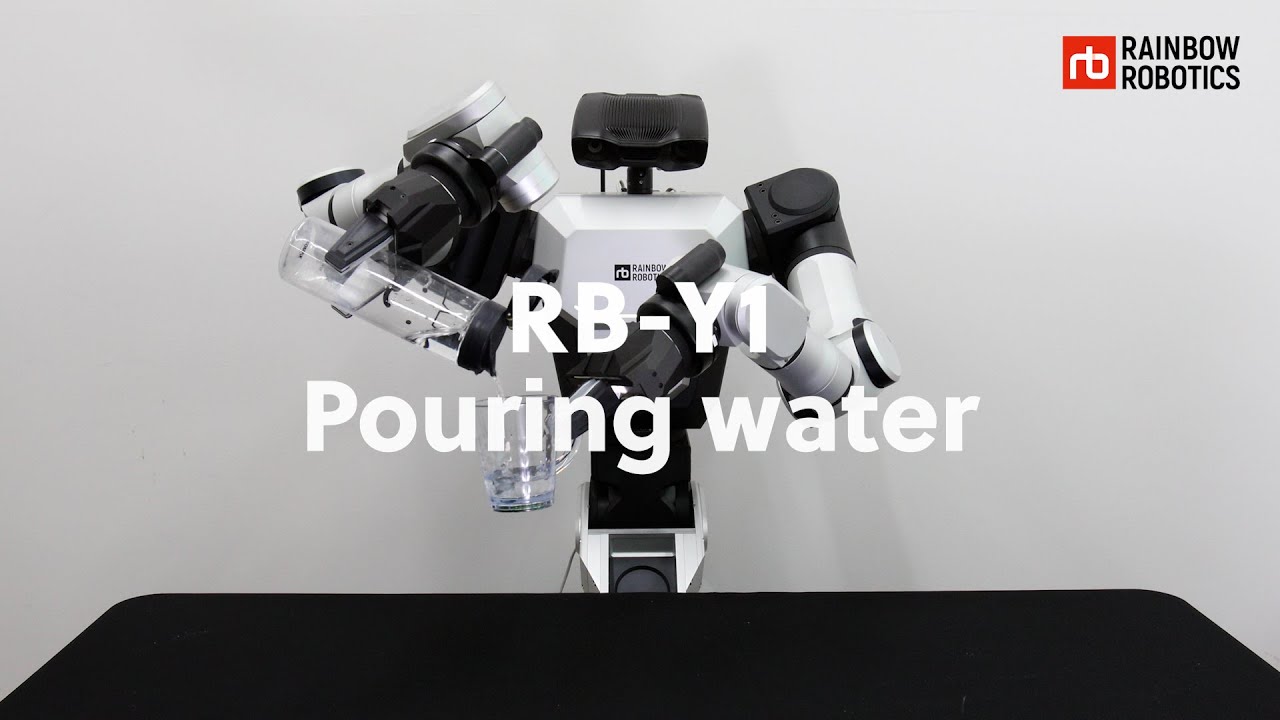 RB-Y1 Mobile Dual-Arm Robot: Pouring Water
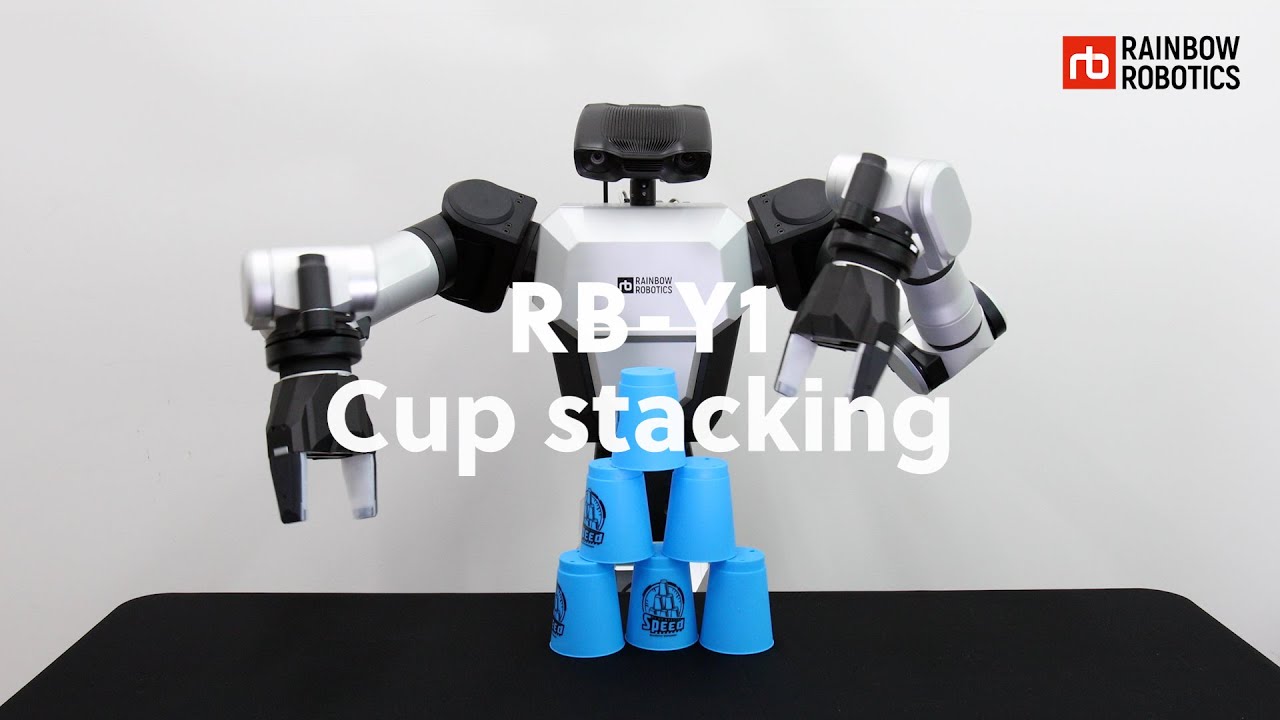 RB-Y1 Mobile Dual-Arm Robot: Cup Stacking
Rainbow Robotics’ robotics experts will propose an automation strategy tailored to your site.

