01 Reduced Exposure to Dangerous Environments
In hazardous environments such as high heat, gas, dust, and confined spaces
Minimizes the need for direct worker access
Safety and response automation uses robots for worker protection, early hazard detection, emergency response, patrol, and monitoring in dangerous environments.
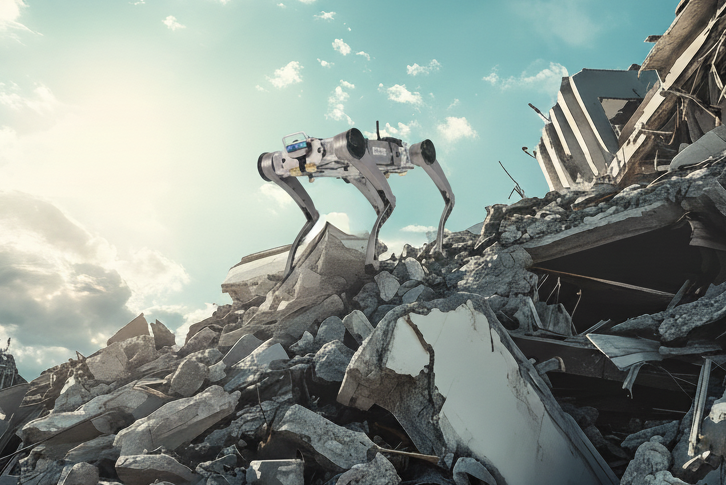
Robots reduce direct human exposure in high-heat, gas, dust, height, confined-space, and remote-area work.
Key Benefits
In hazardous environments such as high heat, gas, dust, and confined spaces
Minimizes the need for direct worker access
Detect and assess risks, and respond immediately
Effectively shortens emergency time.
Through automation of repeated inspection standards
Data-Driven Management Without Omissions
Continuous monitoring and inspection are possible
Reduces workforce burden and operational risk
Technology Highlights
Rainbow Robotics provides robot platforms that automate safety and response scenarios using collaborative-robot safety, AMR autonomy, and quadruped mobility.
Even in environments that are difficult for workers to access, such as high-temperature equipment, areas around chemicals, enclosed spaces, and outdoor terrain
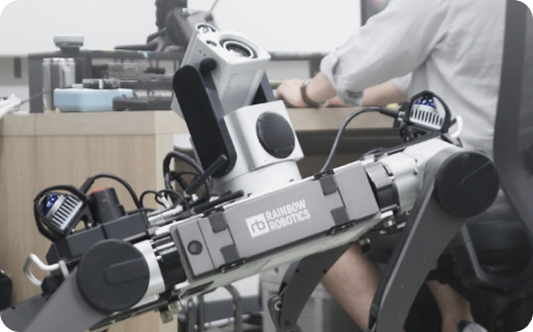
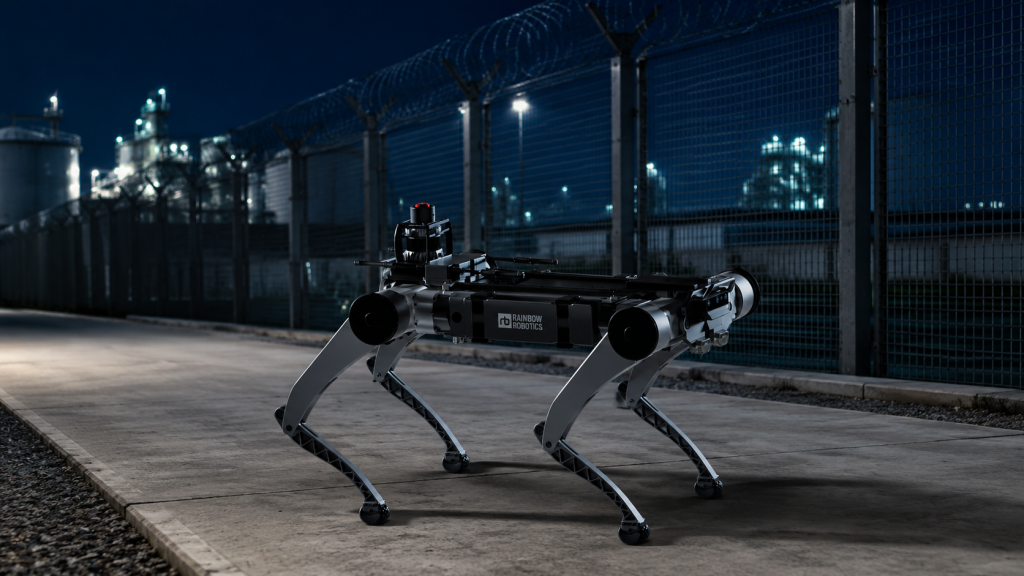
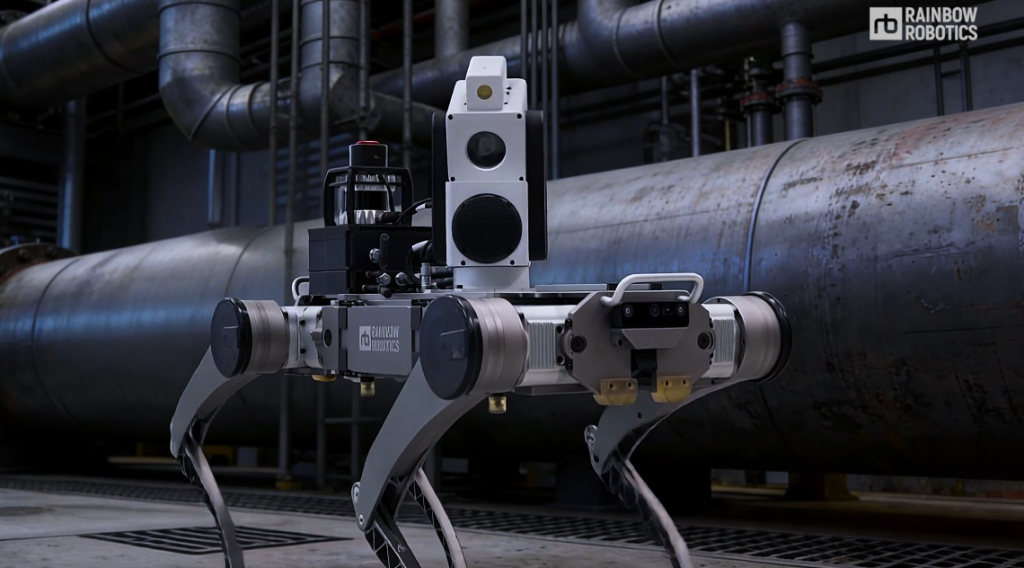
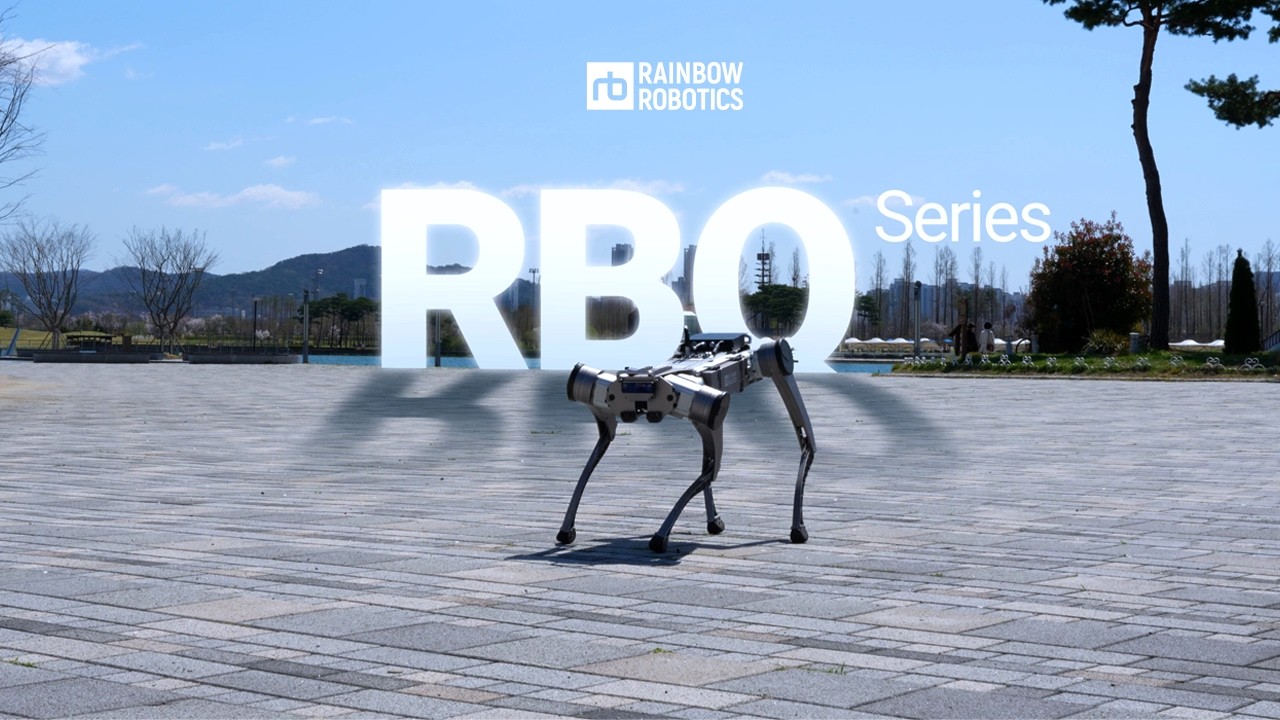
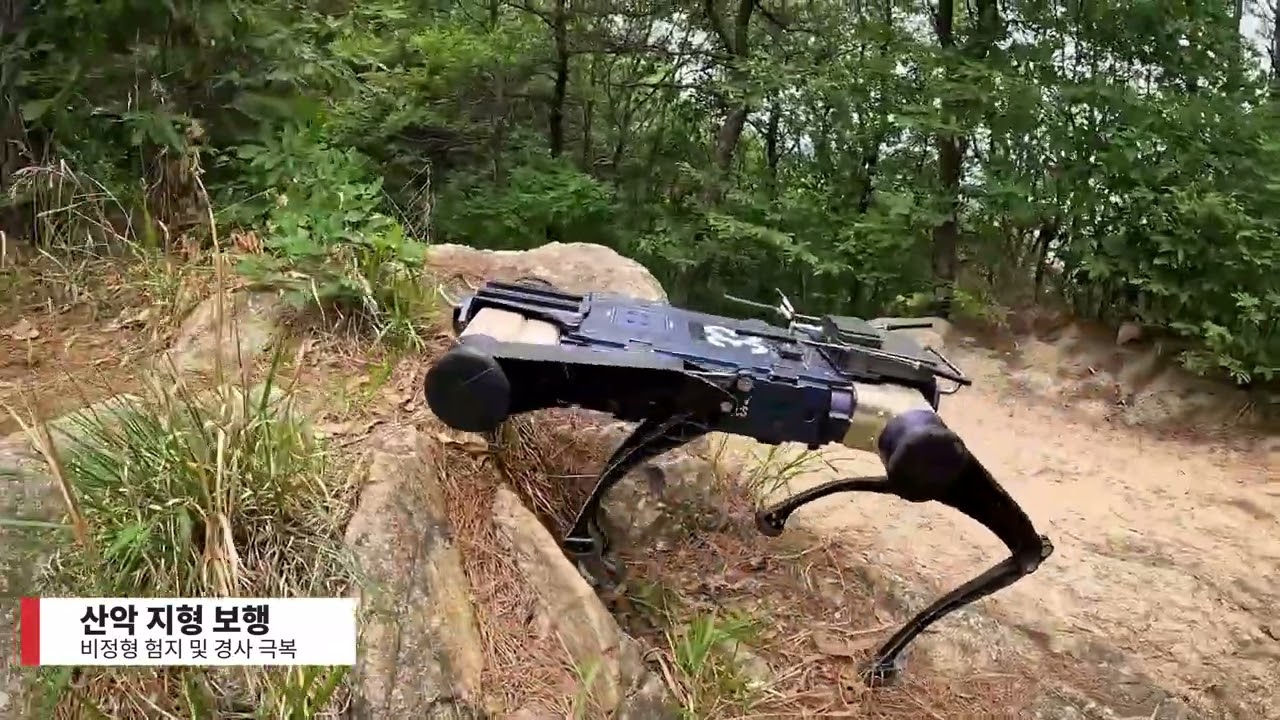
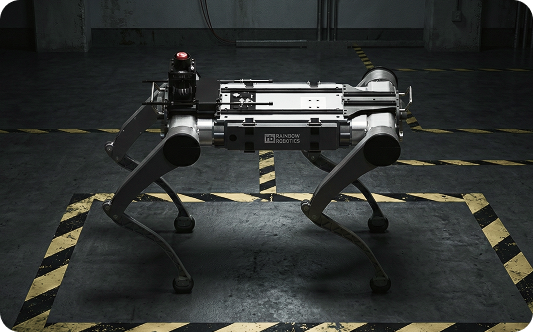
Robots can reliably approach and perform inspection, imaging, and measurement. In particular, quadruped robots can easily navigate stairs, slopes, and irregular terrain, making indoor and outdoor patrols as well as facility inspections much easier.
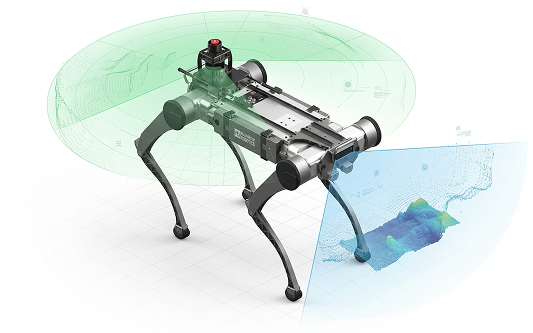
Interact with various sensors such as multi-camera, LiDAR, and beamforming microphones
It can detect temperature rise, leaks, intrusions, equipment abnormalities, and more in real time.
Combined with AI-based event analysis capabilities, it is possible to establish a rapid response system in the event of a risk situation.
If entry into a hazardous area is required, the robot can be precisely controlled remotely, and,
Repeated inspections can be operated in an automatic patrol mode based on designated routes.
This can significantly improve operational efficiency in environments requiring night shifts, remote locations, and continuous monitoring.
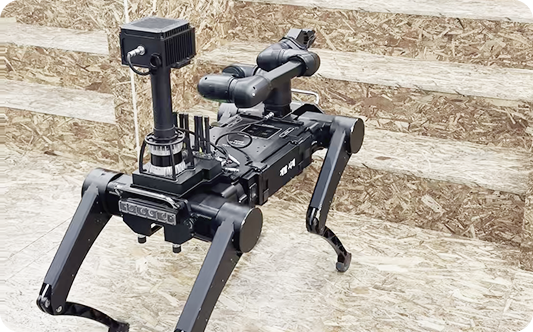
The robotic system can interconnect with both existing safety equipment and security infrastructure, enabling the expansion of response systems tailored to the field.
It can integrate not only safety protocols such as emergency shutdowns, access restrictions, and equipment interlocks, but also security functions such as intrusion detection, access control, and perimeter monitoring.